Aromatic Dan Dan Noodles with Crispy Pork
 vxda
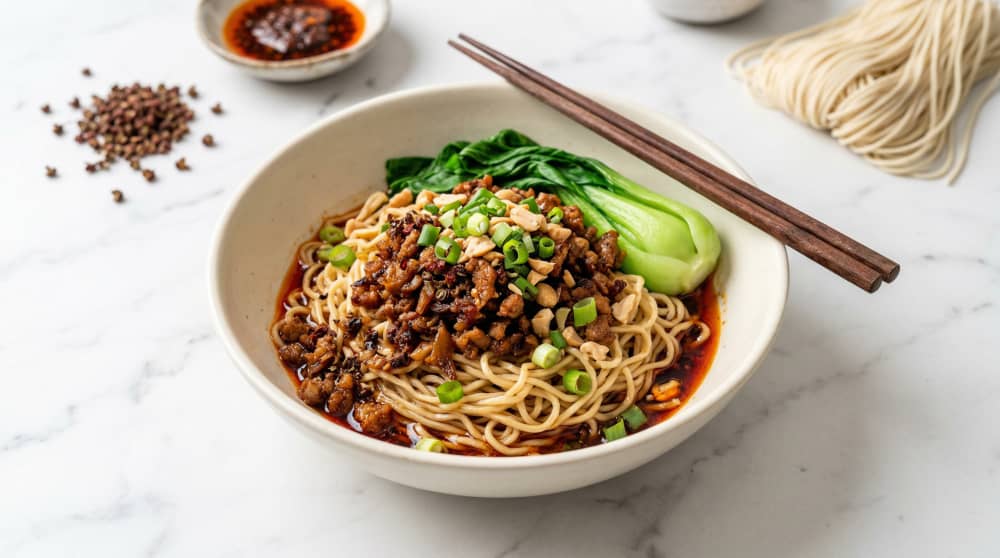
vxdaTransport yourself to the streets of Chengdu with this authentic dan dan noodles recipe. The má là spicy sensation from Sichuan peppercorns blends with crispy, caramelized pork and a deep sesame-chili sauce, creating a symphony of flavors and textures that will warm you from the inside out.
Ingredients
NOODLES
- 200 g wheat noodle — look for Chinese "thin wheat noodles", not ramen, not the thinnest
Pork with Ya Cai (topping)
- 150 g ground pork — ~20% fat
- 2 tbsp ya cai — or Polish substitute below – see "Ya Cai substitute in Polish cuisine" section
- 1 tbsp shaoxing rice wine — substitute: dry sherry
- 1 tsp dark soy sauce
- 1 tbsp neutral oil — rapeseed, peanut
- ½ tsp sugar
SAUCE (DIVIDED INTO TWO BOWLS)
- 2 tbsp sesame paste — emergency substitute: tahini without sugar + a drop of sesame oil
- 4 tbsp sichuan chili oil — key ingredient; do not use sriracha
- 3 tbsp light soy sauce
- 1 tbsp chinkiang vinegar
- 1 tsp sugar
- ½ tsp sichuan peppercorn — toast in a dry pan for 30 seconds before grinding
- 2 pcs garlic — finely grated
- 4 tbsp noodle cooking water — to loosen the sauce
FOR SERVING
- 2 pcs chive — finely chopped (green part only)
- 2 tbsp peanut — roughly chopped
- 4 pcs pak choi — optional, for blanching
Instructions
- 1
Prepare the Sichuan peppercorns. Toast the peppercorns in a dry pan over low heat for 30-60 seconds, until they begin to smell citrusy and slightly smoky. Grind in a mortar and pestle or grinder. Set aside.
- 2
Fry the pork with ya cai. Heat a tablespoon of oil in a wok / frying pan until very hot. Add the meat, break it up with a spoon, and fry for ~4 minutes, until the water evaporates and the meat begins to brown. Add Shaoxing wine, dark soy sauce, and sugar - fry for another 2 minutes. Add the squeezed ya cai and fry for 2-3 minutes, until everything becomes dark and crispy at the edges. Remove from heat.
- 3
Boil water for the noodles. Large pot, no salt (the sauce is already salty).
- 4
Assemble the sauce in bowls. In each bowl, mix: 1 tablespoon of sesame paste, 2 tablespoons of chili oil with sediment, 1.5 tablespoons of soy sauce, 0.5 tablespoon of Chinkiang vinegar, 0.5 teaspoon of sugar, 0.25 teaspoon of ground Sichuan pepper, and 1 grated clove of garlic. Do not add water yet.
- 5
Blanch the vegetable (optional). Put the pak choi into boiling water for 45 seconds, remove with a slotted spoon, set aside.
- 6
Cook the noodles. In the same water. Fresh -2-3 minutes, dried according to the package (usually 4-5 minutes) - they should be al dente, slightly firm. Before draining, pour 3 tablespoons of hot cooking water into each bowl with sauce and mix until the sauce loosens to a consistency like thin cream.
- 7
Assemble the bowl. Immediately add the drained noodles to the bowl with sauce — do not mix. Top with a portion of crispy pork with ya cai, pak choi, sprinkle with scallions and peanuts. An extra teaspoon of chili oil on top won't hurt.
- 8
Serve immediately with the instruction for eaters: "mix from the bottom with chopsticks before eating". It's a ritual - sauce at the bottom, meat and aromas on top, everything comes together at the moment of eating.
Notes
Why freshly toasted pepper: Only freshly toasted and ground Sichuan pepper will provide the characteristic má là effect, that is, the "numbing" of the tongue. Ready-made ground powder from a jar, unfortunately, does not reflect this depth of taste and sensation.
Purpose of frying the meat: We want the meat to be dry and crispy, not braised. It is supposed to be an important element of the dish's texture, not create a sauce.
Secret of the technique: Arranging the sauce separately in each bowl, instead of mixing it in one dish, is a classic, clever technique that allows each portion to retain its own unique depth of flavor.
STORAGEBoth the sauce and the meat with ya cai can be prepared in advance - they will stay fresh in the refrigerator for up to 3 days. Always cook the noodles fresh, just before serving.
YA CAI SUBSTITUTE IN POLISH CUISINE (PROVEN)If access to Asian ingredients is difficult, an excellent substitute is sauerkraut. This is a recommendation from Fuchsia Dunlop herself. Use in a 1:1 ratio (2 tablespoons for the recipe).
Preparation method: Take about 3 tablespoons of sauerkraut, rinse under cold running water (to reduce the acidity), and then squeeze very hard in your hands or a cloth - it must be almost dry. Finely chop it. In a dry pan (without oil), toast the cabbage over medium heat for 3-4 minutes, stirring constantly, until the remaining moisture evaporates. Add 0.5 teaspoon of dark soy sauce and a pinch of sugar, fry for another minute. Use the cabbage prepared in this way instead of ya cai in step 2.
Other options: You can use tianjin preserved vegetable (冬菜) from a jar (available in Asian online stores, e.g. kuchniachinska.pl, orientalny.pl, Amazon) - this solution is closest to the original. As a fallback, you can also finely chop capers and add a teaspoon of miso.